Salvation
Do All Dogs Go to Heaven? A Journey Through Faith, Love, and Hope
Do All Dogs Go to Heaven? A Journey Through Faith, Love, and Hope
The question of whether dogs go to heaven has long captivated the hearts and minds of pet owners, theologians, and philosophers alike. It’s a query that, while seemingly simple, touches on profound themes of love, loss, and the nature of the afterlife. In this exploration, we’ll delve into various perspectives on this intriguing topic, examining theological viewpoints, pastoral approaches, emotional considerations, and even pop culture influences. By the end, you may find a perspective that resonates with your own beliefs and experiences.
Theological Perspectives: A Divine Dilemma
Traditional Views: The Soul Question
In many traditional Christian teachings, the belief is that animals, including our beloved canine companions, do not go to heaven. This perspective is rooted in the idea that animals lack immortal souls. According to this view, only humans are created in the image of God and possess spirits capable of receiving eternal life. This belief often draws support from scriptures such as:
**”So God created man in his own image, in the image of God created he him; male and female created he them.” (Genesis 1:27, KJV)**
This verse, proponents argue, sets humans apart as unique bearers of God’s image, implying a fundamental difference between humans and animals in terms of their spiritual nature and eternal destiny.

Alternative Interpretations: A More Inclusive Heaven
However, not all theologians agree with this traditional stance. Some argue that animals were part of God’s original creation and were present in the Garden of Eden, a place of perfect harmony. They point to biblical descriptions of heaven that include animals, such as:
**”And I saw heaven opened, and behold a white horse; and he that sat upon him was called Faithful and True, and in righteousness he doth judge and make war.” (Revelation 19:11, KJV)**
This verse, along with others, suggests that animals may indeed have a place in the heavenly realm. Furthermore, some scholars argue that if animals were part of God’s perfect creation, they may also have a role in the restored creation of heaven.

Interestingly, the Bible also offers a more inclusive vision of creation praising God:
**”And every creature which is in heaven, and on the earth, and under the earth, and such as are in the sea, and all that are in them, heard I saying, Blessing, and honour, and glory, and power, be unto him that sitteth upon the throne, and unto the Lamb for ever and ever.” (Revelation 5:13, KJV)**
This verse paints a picture of universal worship, including all creatures, which could be interpreted as supporting the presence of animals in heaven.
Pastoral Approaches: Comfort in Times of Grief
Comforting the Grieving: God’s Boundless Love
Pastoral care often takes a more comforting approach, especially when dealing with children or grieving pet owners. Many pastors and religious leaders emphasize God’s love and compassion, suggesting that if animals are needed for our happiness in heaven, God may allow them to be present. This perspective is less about strict theological doctrine and more about offering solace to those mourning the loss of a beloved pet.
Some leaders point to verses that highlight God’s care for all creatures:
**”Are not five sparrows sold for two farthings, and not one of them is forgotten before God?” (Luke 12:6, KJV)**
This verse suggests that God’s attention and care extend even to the smallest of creatures, offering comfort to those who wonder about the fate of their pets.
A Vision of Harmony: The Peaceable Kingdom
The Bible also offers visions of a future paradise where animals coexist in perfect harmony:
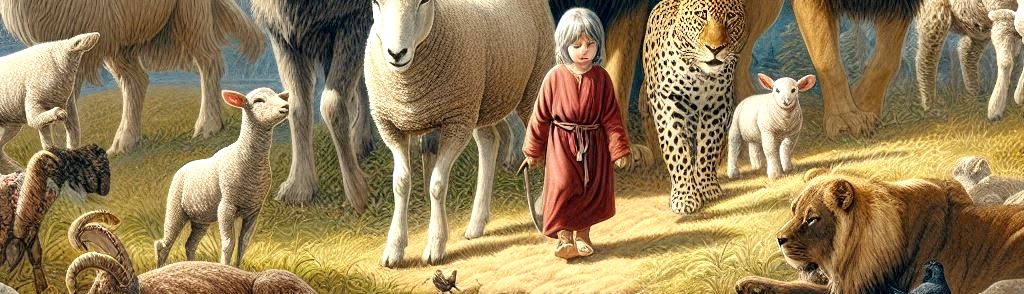
**”The wolf also shall dwell with the lamb, and the leopard shall lie down with the kid; and the calf and the young lion and the fatling together; and a little child shall lead them.” (Isaiah 11:6, KJV)**
While this verse is often interpreted as a metaphorical description of peace, it has also been used to support the idea that animals may have a place in God’s eternal kingdom.
Emotional Considerations: The Power of the Human-Animal Bond
The emotional bond between humans and their pets is undeniable. Dogs, in particular, are known for their loyalty, unconditional love, and companionship. For many pet owners, the idea of being separated from their beloved animals in the afterlife is deeply distressing. This emotional connection often leads people to hope that their pets will join them in heaven, where they can continue to experience the joy and love they shared on earth.
Many people have personal stories and experiences that reinforce their belief in an afterlife for animals. Some recount dreams or visions of their pets in a peaceful, heavenly setting. Others find comfort in the idea that their pets are watching over them from a better place. These personal narratives, while not necessarily theological, play a significant role in shaping individual beliefs about the afterlife for animals.
Philosophical Considerations: Redemption and Creation
The Nature of Redemption: Innocence and Salvation
One philosophical argument is that since animals do not sin, they do not require redemption in the same way humans do. This raises the question of whether animals are subject to the same afterlife considerations as humans. Some philosophers argue that animals, by their very nature, live in accordance with God’s will and therefore do not need the same kind of salvation.
The Bible does suggest a difference between humans and animals in terms of spiritual matters:
**”For that which befalleth the sons of men befalleth beasts; even one thing befalleth them: as the one dieth, so dieth the other; yea, they have all one breath; so that a man hath no preeminence above a beast: for all is vanity.” (Ecclesiastes 3:19, KJV)**
This verse highlights the common mortality of humans and animals but also raises questions about their respective spiritual destinies.
The Role of Animals in Creation: A Cosmic Tapestry
Another philosophical consideration is the role of animals in God’s creation. If animals are seen as integral parts of the created world, their presence in the afterlife could be viewed as a continuation of their role in God’s plan. This perspective emphasizes the interconnectedness of all living beings and suggests that the afterlife may be a place where this interconnectedness is fully realized and celebrated.
Cultural and Literary Influences: Imagination Meets Faith
Popular Culture: Heavenly Canines on Screen
The idea that all dogs go to heaven has been popularized by various cultural and literary works. One notable example is the 1989 animated film “All Dogs Go to Heaven,” which tells the story of a dog who finds redemption and a place in heaven. Such works often reflect and reinforce popular beliefs and hopes about the afterlife for animals.
Literature and Poetry: Immortal Companions
Literature and poetry have also explored the theme of animals in the afterlife. Poets like Rudyard Kipling and Eugene O’Neill have written movingly about the hope of reuniting with beloved pets in heaven. These literary works resonate with readers’ emotions and offer a creative exploration of the idea that animals may have a place in the afterlife.
Consider This: A Matter of Faith and Heart
The question of whether dogs go to heaven is complex and multifaceted, touching on theological, pastoral, emotional, and philosophical considerations. While traditional theological perspectives may not support the idea, alternative interpretations, pastoral approaches, and personal experiences offer a more comforting and inclusive view.
Ultimately, the belief in an afterlife for animals is deeply personal and often shaped by individual experiences and emotions. Whether you find solace in theological doctrine, personal narratives, or cultural influences, the hope that our beloved pets may join us in heaven reflects the profound impact they have on our lives.
As we navigate this question, we are reminded of the love, joy, and companionship that animals bring into our lives, and the ways in which they enrich our human experience. Perhaps, in the end, the most comforting thought is that a God who created such wonderful creatures and allowed us to form such deep bonds with them would surely understand our desire to be reunited in the hereafter.
While we may not have a definitive answer, the very act of pondering this question reminds us of the depth of our love for our animal companions and the hope that love, in all its forms, transcends the boundaries of this earthly life.

“Understanding the Rapture: Dr. David Jeremiah’s Insights and Common Misconceptions”
“Understanding the Rapture: Dr. David Jeremiah’s Insights and Common Misconceptions”
In the realm of Christian eschatology, few topics spark as much intrigue and debate as the Rapture. This prophesied event, where believers are caught up to meet Christ in the air, has captivated the minds of Christians for generations. Today, we’ll explore four essential truths about the Rapture, as highlighted by renowned Bible teacher Dr. David Jeremiah, and then delve into some common misconceptions surrounding this fascinating subject.
4 Essential Truths About the Rapture
1. Signs of the Times
Dr. Jeremiah emphasizes that while we cannot predict the exact timing of the Rapture, certain signs suggest its approach. One significant indicator is the increasing prevalence of deception, as Jesus warned:
“Take heed that no man deceive you. For many shall come in my name, saying, I am Christ; and shall deceive many.” (Matthew 24:4-5, KJV)
This deception manifests in various forms, from false messiahs to misleading ideologies. As Christians, we must remain vigilant and discerning, anchoring ourselves firmly in God’s Word.
2. The Futility of Date-Setting
While it’s natural to wonder about the Rapture’s timing, Scripture is clear that its exact date is known only to God. Jesus Himself stated:
“But of that day and hour knoweth no man, no, not the angels of heaven, but my Father only.” (Matthew 24:36, KJV)
Dr. Jeremiah strongly cautions against attempts to predict the specific date of the Rapture. Instead, we should focus on living each day in anticipation of Christ’s return, fostering spiritual readiness and motivating us to serve God faithfully in the present.
3. The Inclusivity of the Rapture
A common concern among Christians is whether they will be part of the Rapture if their physical bodies have been destroyed or cremated. Dr. Jeremiah offers reassurance, emphasizing God’s unlimited power to resurrect and transform our bodies. The apostle Paul addressed this:
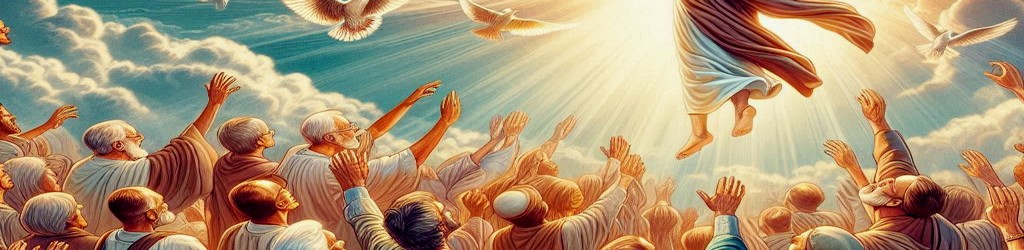
“For the Lord himself shall descend from heaven with a shout, with the voice of the archangel, and with the trump of God: and the dead in Christ shall rise first: Then we which are alive and remain shall be caught up together with them in the clouds, to meet the Lord in the air: and so shall we ever be with the Lord.” (1 Thessalonians 4:16-17, KJV)
4. The Judgment Seat of Christ
After the Rapture, believers will stand before the Judgment Seat of Christ. This judgment is not about determining salvation but evaluating our earthly works and service to God. Paul describes this event:
“For we must all appear before the judgment seat of Christ; that every one may receive the things done in his body, according to that he hath done, whether it be good or bad.” (2 Corinthians 5:10, KJV)
Common Misconceptions About the Rapture
As we delve deeper into this topic, it’s crucial to address some widespread misconceptions that have emerged over time:
1. The Rapture is a Secret Event
Contrary to popular belief, the Rapture is not described as a silent, secret occurrence. The very passage that speaks of believers being “caught up” portrays it as a loud, public event with “a shout, with the voice of the archangel, and with the trump of God” (1 Thessalonians 4:16-17, KJV).
2. The Rapture Teaching is Ancient and Universally Accepted
Interestingly, the concept of a pre-tribulation Rapture as commonly taught today did not exist before the 1800s. It was introduced by John Darby and gained popularity through the Scofield Reference Bible. This relatively recent origin doesn’t negate its potential validity but does highlight the importance of careful biblical study.
3. The Word “Rapture” Appears in the Bible
The term “rapture” is not found in English translations of the Bible. It comes from the Latin word “rapio,” used to translate the Greek word “harpazo” meaning “caught up” in 1 Thessalonians 4:17. While the concept is biblical, the term itself is not.

4. The Rapture and the Second Coming are Separate Events
Some teach that the Rapture and Second Coming are distinct events separated by years. However, many scholars argue that the Bible doesn’t make this clear distinction. This debate underscores the complexity of end-times prophecy and the need for humble, careful study.
5. Christians Should Fear Being Left Behind
This misconception has caused unnecessary anxiety among believers. Those who have accepted Christ as Savior are secure in God’s promise of salvation. As Paul reassures us:
“For I am persuaded, that neither death, nor life, nor angels, nor principalities, nor powers, nor things present, nor things to come, Nor height, nor depth, nor any other creature, shall be able to separate us from the love of God, which is in Christ Jesus our Lord.” (Romans 8:38-39, KJV)
6. The Tribulation is Only About God’s Judgment
While judgment is indeed part of the Tribulation period, it’s also a time of salvation. God uses this period to bring many to faith in Christ, demonstrating His mercy even in times of great distress.
7. All Christians Believe in a Pre-tribulation Rapture
There are actually various views on the timing of the Rapture among Christians, including pre-tribulation, post-tribulation, and mid-tribulation perspectives. This diversity of thought reminds us to hold our views with humility and grace towards those who may interpret differently.
Consider This: Living in Light of the Rapture
As we contemplate these truths and address misconceptions about the Rapture, we should be inspired to live with greater faithfulness and anticipation. The apostle Peter exhorts us:
“But the day of the Lord will come as a thief in the night; in the which the heavens shall pass away with a great noise, and the elements shall melt with fervent heat, the earth also and the works that are therein shall be burned up. Seeing then that all these things shall be dissolved, what manner of persons ought ye to be in all holy conversation and godliness, Looking for and hasting unto the coming of the day of God, wherein the heavens being on fire shall be dissolved, and the elements shall melt with fervent heat?” (2 Peter 3:10-12, KJV)
The study of the Rapture and other prophetic events should not lead to fear or anxiety, but to a renewed sense of purpose and hope. As we navigate the challenges of this world, let us keep our eyes fixed on Christ and the glorious future He has promised to those who love Him. Let us commit ourselves anew to living for Christ, sharing His love with others, and eagerly anticipating His return.
In the words of Paul, “Wherefore comfort one another with these words.” (1 Thessalonians 4:18, KJV) May the hope of the Rapture inspire us to live each day with purpose, love, and unwavering faith in our Lord Jesus Christ.
Will we become angels when we go to Heaven?
Will we become angels when we go to Heaven?
### **The Nature of Angels**
Before delving into the possibility of becoming angels, it is crucial to understand the nature of these celestial beings. Angels are spiritual entities created by God to serve as His messengers and ministers. They are described as powerful, immortal, and possessing extraordinary abilities. The Bible provides numerous accounts of angels appearing to humans, delivering divine messages, and carrying out God’s will.
**Psalm 148:2-5 (KJV)** – “Praise ye him, all his angels: praise ye him, all his hosts. Praise ye him, sun and moon: praise him, all ye stars of light. Praise him, ye heavens of heavens, and ye waters that be above the heavens. Let them praise the name of the Lord: for he commanded, and they were created.”
### **The Transformation of Believers**
While the Bible does not explicitly state that we will become angels in Heaven, it does provide insights into the transformation that believers will undergo. The Apostle Paul, in his letter to the Corinthians, sheds light on this profound change:
**1 Corinthians 15:51-53 (KJV)** – “Behold, I shew you a mystery; We shall not all sleep, but we shall all be changed, In a moment, in the twinkling of an eye, at the last trump: for the trumpet shall sound, and the dead shall be raised incorruptible, and we shall be changed. For this corruptible must put on incorruption, and this mortal must put on immortality.”
These verses reveal that believers will undergo a miraculous transformation, exchanging their corruptible and mortal bodies for incorruptible and immortal ones. This transformation aligns with the nature of angels, who are immortal and spiritual beings.

### **The Heavenly Hierarchy**
The Bible also provides glimpses into the heavenly hierarchy, suggesting that there are different ranks and roles among the angelic beings. For instance, the book of Revelation mentions various types of angels, such as cherubim and seraphim, each with distinct responsibilities and positions.
**Revelation 4:6-8 (KJV)** – “And before the throne there was a sea of glass like unto crystal: and in the midst of the throne, and round about the throne, were four beasts full of eyes before and behind. And the first beast was like a lion, and the second beast like a calf, and the third beast had a face as a man, and the fourth beast was like a flying eagle. And the four beasts had each of them six wings about him; and they were full of eyes within: and they rest not day and night, saying, Holy, holy, holy, Lord God Almighty, which was, and is, and is to come.”
While believers may not necessarily become angels in the traditional sense, it is possible that they will be assigned unique roles and responsibilities within the heavenly realm, akin to the different ranks of angels described in Scripture.
MORE INFORMATION CONCERNING HEAVEN
### **The Eternal Worship and Service**
One of the primary purposes of angels is to worship and serve God eternally. The book of Revelation paints a vivid picture of the heavenly hosts praising and glorifying the Almighty:
**Revelation 7:11-12 (KJV)** – “And all the angels stood round about the throne, and about the elders and the four beasts, and fell before the throne on their faces, and worshipped God, Saying, Amen: Blessing, and glory, and wisdom, and thanksgiving, and honour, and power, and might, be unto our God for ever and ever. Amen.”
Similarly, believers in Heaven will join the angelic hosts in eternal worship and service to God. The Apostle John’s vision in Revelation depicts the redeemed multitude praising God day and night, echoing the ceaseless worship of the angels.
**Revelation 7:15 (KJV)** – “Therefore are they before the throne of God, and serve him day and night in his temple: and he that sitteth on the throne shall dwell among them.”
### **The Eternal Communion with God**
Ultimately, the greatest joy and fulfillment in Heaven will be the eternal communion with God Himself. While angels are privileged to behold the glory of God and carry out His will, believers will experience an even deeper and more intimate relationship with their Creator.
**1 John 3:2 (KJV)** – “Beloved, now are we the sons of God, and it doth not yet appear what we shall be: but we know that, when he shall appear, we shall be like him; for we shall see him as he is.”
This verse promises that believers will be transformed into the likeness of Christ, enabling them to see God in all His glory and experience an unparalleled closeness with Him.

### **The Eternal Inheritance**
Furthermore, the Bible reveals that believers will inherit an eternal kingdom, reigning with Christ forever. This inheritance surpasses the role and purpose of angels, who are servants of God and ministers to the heirs of salvation.
**Revelation 22:5 (KJV)** – “And there shall be no night there; and they need no candle, neither light of the sun; for the Lord God giveth them light: and they shall reign for ever and ever.”
While angels are mighty and glorious beings, they are not destined to inherit the kingdom promised to believers. This eternal inheritance sets believers apart, elevating them to a unique and exalted position in the heavenly realm.

MORE INFORMATION CONCERNING HEAVEN
## Conclusion
As we ponder the question of whether we will become angels in Heaven, the Bible provides profound insights and assurances. While we may not take on the traditional form of angels, the transformation promised to believers is far more glorious and intimate. We will be granted incorruptible and immortal bodies, assigned unique roles and responsibilities, and join the angelic hosts in eternal worship and service to God.
However, our ultimate destiny transcends even the exalted state of angels. We will experience an unparalleled closeness with our Creator, beholding His glory and reigning with Christ forever in the eternal kingdom. The heavenly realm holds wonders beyond our wildest imagination, and the Bible assures us that our eternal destiny will be one of unspeakable joy, fulfillment, and communion with the Almighty.
As we journey through this life, let us hold fast to the promises of God’s Word, eagerly anticipating the day when we will experience the fullness of our heavenly transformation and eternal inheritance.
What does the Bible say about Heaven? * Insights from Scripture
What does the Bible say about Heaven? * Insights from Scripture
Heaven, as depicted in the Bible, is a realm of divine glory, eternal bliss, and the presence of God. Throughout the pages of Scripture, various passages offer insights into the nature of Heaven, its inhabitants, and the conditions for entry. In this exploration, we delve into the biblical teachings about Heaven, drawing from both the Old and New Testaments.
### Heaven as God’s Dwelling Place
The Bible portrays Heaven as the abode of God Almighty, the Creator of the universe. In Psalm 115:16, it is written, “The heaven, even the heavens, are the Lord’s: but the earth hath he given to the children of men.” Similarly, Isaiah 66:1 declares, “Thus saith the Lord, The heaven is my throne, and the earth is my footstool: where is the house that ye build unto me? and where is the place of my rest?”
Revelation 4 provides a vivid depiction of the heavenly throne room, where God is surrounded by myriads of angels and redeemed saints, worshiping Him ceaselessly: “And immediately I was in the spirit: and, behold, a throne was set in heaven, and one sat on the throne… And round about the throne were four and twenty seats: and upon the seats I saw four and twenty elders sitting, clothed in white raiment; and they had on their heads crowns of gold.” (Revelation 4:2-4, KJV)

### Eternal Life and Joy
Central to the biblical concept of Heaven is the promise of eternal life and joy for those who are faithful to God. In John 14:2-3, Jesus assures His disciples, saying, “In my Father’s house are many mansions: if it were not so, I would have told you. I go to prepare a place for you. And if I go and prepare a place for you, I will come again, and receive you unto myself; that where I am, there ye may be also.” This promise of eternal fellowship with God brings comfort and hope to believers.
Moreover, Revelation 21:4 describes Heaven as a place where God will wipe away every tear from their eyes, and there will be no more death or mourning or crying or pain, for the former things have passed away: “And God shall wipe away all tears from their eyes; and there shall be no more death, neither sorrow, nor crying, neither shall there be any more pain: for the former things are passed away.”
### Reward for the Righteous
The Bible teaches that Heaven is the ultimate reward for the righteous and faithful followers of God. In Matthew 5:12, Jesus declares, “Rejoice, and be exceeding glad: for great is your reward in heaven: for so persecuted they the prophets which were before you.” Similarly, Revelation 21:7 promises, “He that overcometh shall inherit all things; and I will be his God, and he shall be my son.” This vision of a glorious future encourages believers to persevere in their faith despite trials and tribulations.
### Entry Requirements
While the Bible offers the promise of Heaven to all who believe in Jesus Christ as their Lord and Savior, it also emphasizes the importance of righteous living and obedience to God’s commandments. In Matthew 7:21, Jesus warns, “Not every one that saith unto me, Lord, Lord, shall enter into the kingdom of heaven; but he that doeth the will of my Father which is in heaven.”
This underscores the significance of genuine faith accompanied by a life of holiness and moral integrity. As the apostle Paul writes in 1 Corinthians 6:9-10, “Know ye not that the unrighteous shall not inherit the kingdom of God? Be not deceived: neither fornicators, nor idolaters, nor adulterers, nor effeminate, nor abusers of themselves with mankind, nor thieves, nor covetous, nor drunkards, nor revilers, nor extortioners, shall inherit the kingdom of God.”
### Resurrection and Transformation
The biblical depiction of Heaven includes the concept of resurrection and transformation for believers. In 1 Corinthians 15:51-52, the apostle Paul writes, “Behold, I shew you a mystery; We shall not all sleep, but we shall all be changed, In a moment, in the twinkling of an eye, at the last trump: for the trumpet shall sound, and the dead shall be raised incorruptible, and we shall be changed.”
This transformation entails the glorification of believers’ bodies, enabling them to dwell in God’s presence for eternity. As Paul further explains in Philippians 3:20-21, “For our conversation is in heaven; from whence also we look for the Saviour, the Lord Jesus Christ: Who shall change our vile body, that it may be fashioned like unto his glorious body, according to the working whereby he is able even to subdue all things unto himself.”
### Unity with Christ
At the heart of the biblical understanding of Heaven is the concept of unity with Christ. In Colossians 3:1-4, Paul writes, “If ye then be risen with Christ, seek those things which are above, where Christ sitteth on the right hand of God. Set your affection on things above, not on things on the earth. For ye are dead, and your life is hid with Christ in God. When Christ, who is our life, shall appear, then shall ye also appear with him in glory.”
This intimate union with Christ forms the essence of believers’ eternal fellowship with God in Heaven. As Jesus Himself declared in John 17:24, “Father, I will that they also, whom thou hast given me, be with me where I am; that they may behold my glory, which thou hast given me: for thou lovedst me before the foundation of the world.”

### Conclusion
The Bible offers a rich tapestry of insights into the nature of Heaven, portraying it as a realm of divine glory, eternal joy, and the presence of God. Through passages spanning both the Old and New Testaments, believers gain glimpses of the heavenly reality awaiting those who place their trust in Jesus Christ and live according to His teachings.
As the ultimate destination for the faithful, Heaven serves as a source of hope, comfort, and inspiration for believers as they journey through life, anticipating the fulfillment of God’s promise of eternal life and communion with Him in the celestial realms. May these biblical insights encourage us to seek the things above and live in a manner worthy of the calling we have received, with our eyes fixed on the eternal inheritance that awaits us in Heaven.
- Heaven Is Real: The Beautiful Comfort Of Knowing It
- The Hidden Joys of Walking With God: Quiet Blessings That Prepare Us for Heaven
- The Nearness of Heaven: Why Eternity Is Closer Than You Think
- Seeing Jesus in Heaven: What Scripture Reveals
- Beauty in Heaven: How God’s Glory Transforms Everything
- What Will Friendship Look Like in Heaven?
- What Happens Between Death and Resurrection?
- Is There Time in Heaven? What Eternity Really Means
- Where Do We Go When We Die? A Biblical Look at Eternity
- Will We Have Our Own Homes in Heaven? Understanding “Many Mansions”
- What Worship Will Be Like in Heaven
- Will We See God’s Face in Heaven?